Sci-Fi Sound Effects Guide
What Are Sci-Fi Sound Effects?
Sci-fi sound effects are audio elements designed to create futuristic and imaginative environments. These sounds are often used to represent advanced technology, space settings, and otherworldly experiences. Unlike natural or realistic sounds, sci-fi audio is built to feel unique, synthetic, and unfamiliar.
Common elements include whoosh sounds, deep impact effects, and subtle alert sounds. These sounds help create a sense of advanced technology and unknown environments.
Why Sci-Fi Sounds Matter
Sci-fi sound effects play a key role in building believable futuristic worlds. Since many sci-fi visuals are based on imaginary concepts, sound is essential for making them feel real.
For example, a simple interface can feel more advanced with a well-designed alert sound or transition effect. These sounds help define how technology behaves in a fictional environment.
Common Types of Sci-Fi Sound Effects
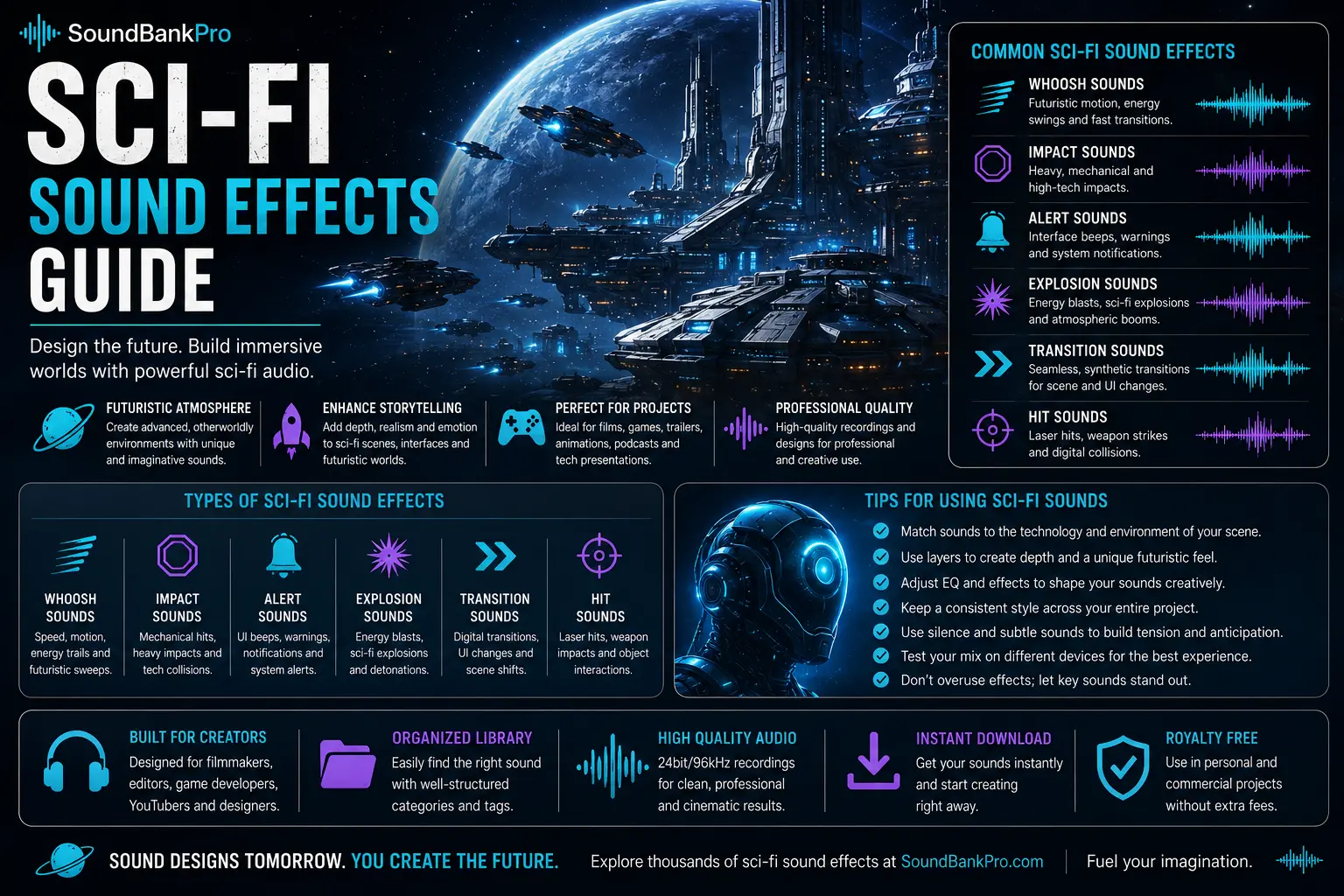
Sci-fi sound design includes a wide range of unique audio elements. These sounds are often layered and processed to create something entirely new.
- Whoosh sounds: Futuristic movement and energy transitions
- Impact sounds: Heavy and processed hits for advanced tech
- Alert sounds: Interface and system notifications
- Explosion sounds: Sci-fi blasts and energy bursts
- Transition sounds: Smooth and synthetic scene changes
Combining these elements helps create immersive and futuristic soundscapes.
Where Sci-Fi Sounds Are Used
Sci-fi sound effects are used in films, games, and digital media to create futuristic environments. They are essential in scenes involving technology, space, and advanced systems.
Even simple edits can benefit from sci-fi audio. Adding a whoosh or transition sound can make visuals feel more advanced and dynamic.
Best Practices for Using Sci-Fi Sounds
Using sci-fi sound effects effectively requires creativity and balance. These sounds should enhance the scene without becoming overwhelming. Overusing effects can make content feel artificial.
Consistency is important. Using similar styles of alert and transition sounds creates a cohesive futuristic environment.
Designing Futuristic Sound Effects
Sci-fi sound design often involves manipulating real-world audio. Designers use processing techniques such as pitch shifting, filtering, and layering to create unique sounds.
For example, combining a impact sound with synthetic layers can create a futuristic hit effect. This approach allows for endless creative possibilities.
Enhancing Motion and Energy
Motion is a key part of sci-fi sound design. Sounds like whoosh effects are used to represent movement, energy, and transitions.
These sounds help connect scenes and create a sense of speed and direction. They are especially useful in fast-paced edits and action sequences.
Common Mistakes to Avoid
One common mistake is overusing complex sounds without purpose. Too many layers can make audio feel cluttered. Another issue is lack of consistency in sound design.
Repetition can also break immersion. Using variations and subtle differences helps maintain a fresh and engaging experience.
Final Thoughts
Sci-fi sound effects are essential for creating futuristic and immersive audio experiences. They bring advanced technology and imaginary worlds to life.
By using sounds such as whoosh, impact, and alert sounds, you can create more engaging and dynamic content. Explore more sounds on SoundBankPro and enhance your projects with creative audio design.
Creating Futuristic Atmospheres with Sound
One of the defining features of sci-fi sound design is the ability to create entirely new atmospheres. Unlike natural environments, futuristic worlds rely heavily on synthetic audio elements. Sounds such as whoosh effects and subtle alert sounds help establish a sense of advanced technology and unknown environments.
Layering these sounds carefully can transform simple visuals into complex and immersive experiences. Even minimal audio can suggest a highly advanced system when designed correctly.
Designing Sci-Fi Interfaces and Systems
In many sci-fi projects, interface sounds play a critical role. These sounds represent communication between users and technology. Subtle alert cues and clean transitions are often used to simulate futuristic systems.
For example, combining a soft alert sound with a quick transition sound can create a believable interface interaction. These details help define how technology behaves in a fictional world.
Using Impact and Hit Sounds in Sci-Fi
Physical interaction in sci-fi environments often relies on enhanced and processed audio. Sounds like impact effects and hit sounds are typically modified to feel more mechanical or energy-based.
These sounds are used in combat, movement, and object interaction. When layered with synthetic textures, they create a more immersive futuristic experience.
Combining Motion and Energy Sounds
Movement in sci-fi scenes is often represented using sound. Fast whoosh sounds can simulate energy flow, speed, or advanced transportation systems.
Combining these with transition sounds helps connect scenes and create a sense of continuity. This technique is widely used in both films and games.
Balancing Complexity and Clarity
While sci-fi sound design allows for creativity, it is important to maintain clarity. Overly complex audio can confuse the listener and reduce the effectiveness of the scene.
Using a combination of clear alert sounds, controlled impact effects, and well-timed transitions ensures that audio remains understandable and engaging.