Cinematic Sound Effects Guide
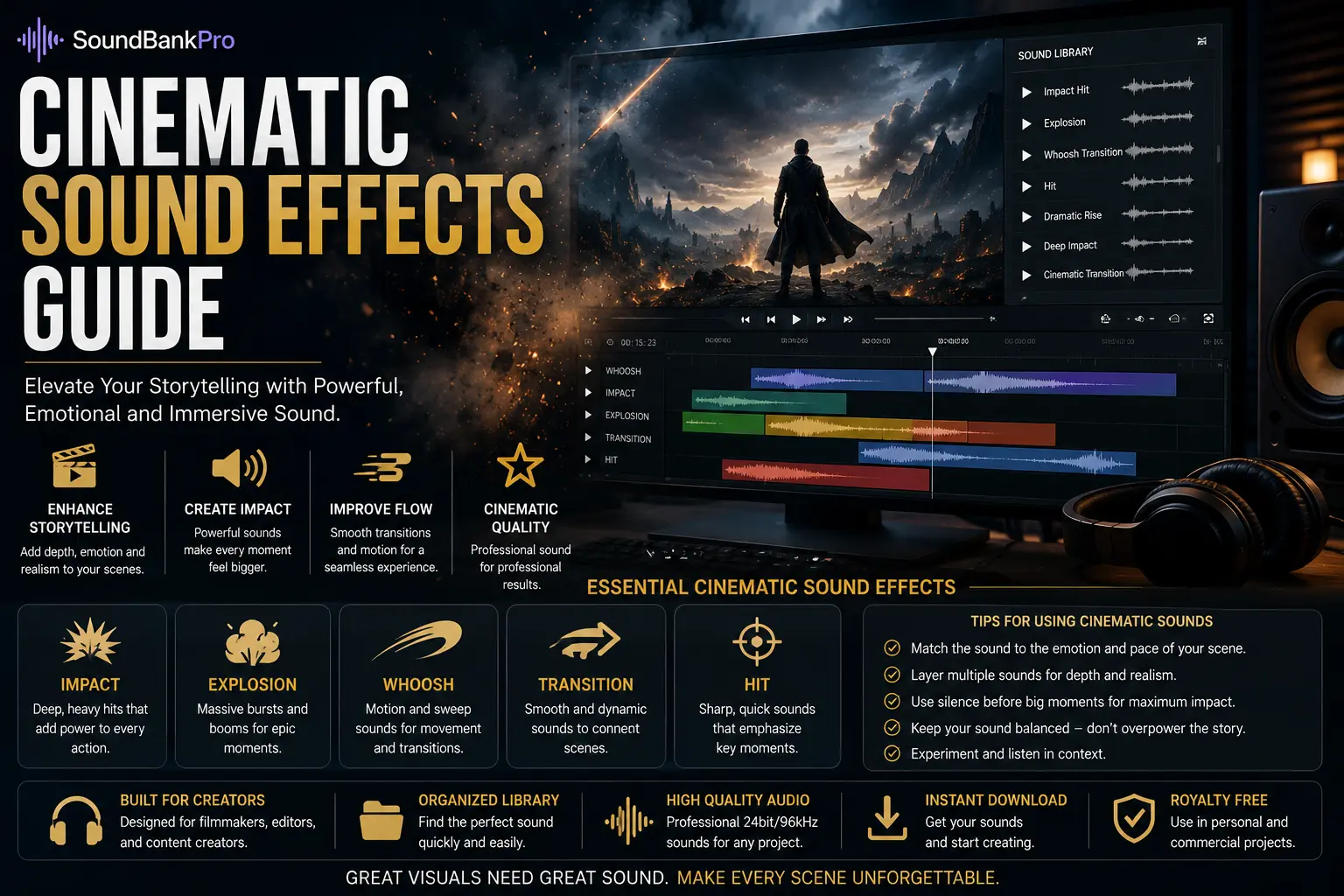
What Are Cinematic Sound Effects?
Cinematic sound effects are audio elements designed to enhance storytelling and create emotional impact in film and video content. These sounds are often larger, deeper, and more dramatic than standard effects, helping to shape the mood and intensity of a scene.
They commonly include elements such as impact sounds, explosions, and layered audio textures. These sounds are used to guide the viewer’s emotions and reinforce visual storytelling.
Why Cinematic Sounds Matter
Sound is one of the most powerful tools in storytelling. Cinematic sound effects add depth, tension, and scale to visual content. Without proper audio, even well-shot scenes can feel flat and less engaging.
For example, a strong hit sound can emphasize a moment of impact, while a subtle whoosh sound can enhance motion and transitions.
Common Types of Cinematic Sound Effects
Cinematic sound design often relies on a combination of different sound types. Each type contributes to a different aspect of the overall experience.
- Impact sounds: Deep and powerful hits that emphasize action
- Explosion sounds: Large-scale effects that add intensity
- Whoosh sounds: Motion-based audio for transitions
- Transition sounds: Audio cues that connect scenes
- Hit sounds: Sharp elements that highlight key moments
Combining these elements creates a layered and immersive cinematic experience.
Where Cinematic Sounds Are Used
Cinematic sound effects are widely used in films, promotional videos, and high-quality content production. They are essential in scenes that require emotional impact, such as action sequences or dramatic reveals.
Even simple edits can benefit from cinematic audio. Adding a transition sound or a subtle whoosh can make scenes feel smoother and more professional.
Best Practices for Using Cinematic Sounds
Using cinematic sound effects effectively requires careful balance. These sounds are powerful, so overusing them can overwhelm the viewer. The goal is to enhance the scene without distracting from it.
Timing is critical. Sounds must align perfectly with visuals to feel natural. A well-timed impact sound can dramatically improve the quality of a scene.
Layering Cinematic Sound Effects
Layering is one of the most important techniques in cinematic sound design. Instead of using a single sound, designers combine multiple elements to create depth and realism.
For example, a cinematic moment may include an explosion, followed by an impact and a subtle background texture. This layering creates a richer and more immersive experience.
Enhancing Transitions and Motion
Cinematic transitions rely heavily on sound. Using whoosh sounds and transition audio helps connect scenes and create smooth visual flow.
These sounds are especially useful in fast-paced edits, where visual changes need to feel intentional and dynamic.
Common Mistakes to Avoid
One common mistake is overusing dramatic sounds. Too many effects can reduce their impact and make the content feel exaggerated. Another issue is poor synchronization, where sounds do not match the visuals.
Repetition is also a problem. Using the same sound repeatedly can break immersion. Adding variation helps maintain a natural and engaging experience.
Final Thoughts
Cinematic sound effects are essential for creating powerful and engaging visual content. They add depth, emotion, and intensity to scenes, helping tell a more compelling story.
By using sounds such as impact, explosion, and whoosh effects, you can significantly improve the quality of your projects. Explore more sounds on SoundBankPro and enhance your storytelling with better audio design.
Creating Emotional Impact with Sound
Cinematic sound effects are essential for building emotional depth in visual content. Sound can transform a simple scene into something powerful and memorable. For example, a deep impact sound can emphasize tension, while a subtle whoosh can create anticipation before a key moment.
These audio cues guide the viewer’s emotions and help create a stronger connection with the content. When used correctly, they can make scenes feel more dramatic and immersive.
Building Cinematic Sequences
Creating cinematic sequences often involves combining multiple sound effects to match the pacing of the visuals. Editors use layered audio to build intensity and maintain engagement throughout a scene.
For example, a sequence may start with a soft transition sound, followed by a rising whoosh, and end with a powerful explosion or impact. This progression creates a dynamic and engaging experience.
Using Silence for Contrast
Silence is an often overlooked tool in cinematic sound design. Removing audio before a key moment can increase tension and make the following sound feel more impactful.
For example, cutting all background audio before a sudden hit sound or explosion can dramatically increase its effect. This contrast helps highlight important moments and keeps the audience engaged.
Enhancing Visual Scale with Sound
Cinematic sound effects are often used to enhance the perceived scale of a scene. Large, deep sounds can make visuals feel bigger and more powerful. For example, combining an explosion with layered impact sounds can create a sense of massive scale.
Even smaller scenes can benefit from this technique. Adding subtle layers can make simple visuals feel more polished and professional.
Improving Editing Workflow with Sound Libraries
Efficient workflow is important when working with cinematic sound effects. Having access to well-organized sound libraries allows editors to quickly find and test different audio elements.
Using categorized sounds such as whoosh, impact, and transition sounds helps streamline the editing process and improve productivity.