Horror Sound Effects Guide
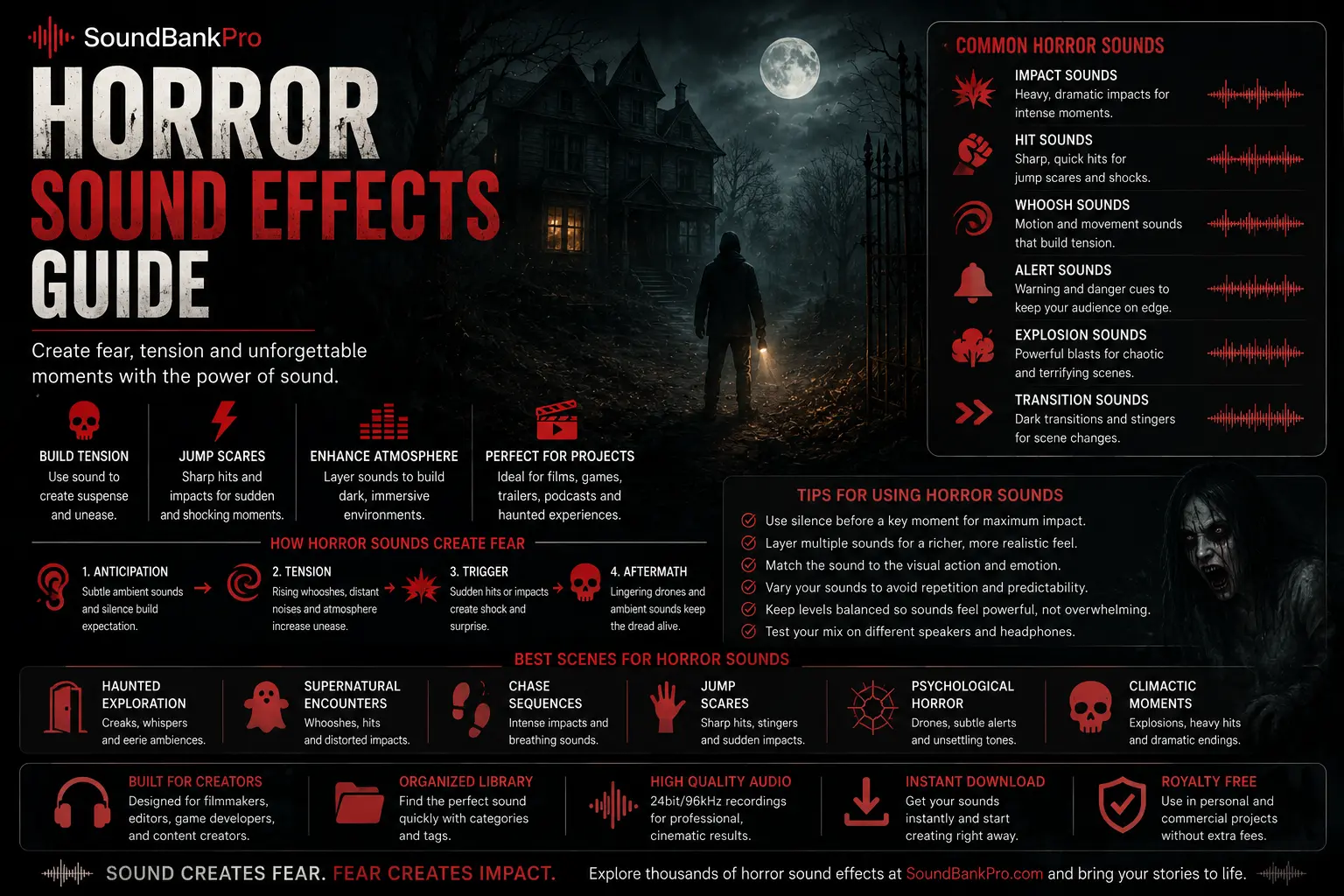
What Are Horror Sound Effects?
Horror sound effects are audio elements designed to create fear, tension, and suspense in visual content. These sounds are carefully crafted to influence emotions and build an unsettling atmosphere. Unlike standard sound effects, horror audio focuses on unpredictability, contrast, and psychological impact.
Common elements include sharp hit sounds, sudden impact effects, and eerie motion created with whoosh sounds. These sounds are used to trigger emotional reactions and keep the audience engaged.
Why Horror Sounds Matter
Sound plays a crucial role in horror content. In many cases, audio is more important than visuals when it comes to creating fear. A well-designed sound can make a simple scene feel terrifying.
For example, a sudden impact sound can create a jump scare, while a subtle alert sound can build tension over time. These techniques are widely used in horror films and games.
Common Types of Horror Sound Effects
Horror sound design relies on a variety of audio elements that work together to create fear and suspense.
- Hit sounds: Sharp and sudden audio for jump scares
- Impact sounds: Deep and heavy sounds for dramatic moments
- Whoosh sounds: Motion-based audio for tension and movement
- Alert sounds: Subtle cues that signal danger
- Explosion sounds: Used for intense or chaotic scenes
Combining these elements helps create a layered and immersive horror experience.
Where Horror Sounds Are Used
Horror sound effects are used in films, games, and digital content to create emotional impact. In games, they help build atmosphere and guide player reactions. In films, they enhance suspense and highlight key moments.
Even simple edits can benefit from horror audio. Adding a transition sound or a subtle whoosh can make scenes feel more intense and unpredictable.
Best Practices for Using Horror Sounds
Using horror sound effects effectively requires careful control. These sounds should be used strategically to avoid reducing their impact. Overuse can make scenes feel repetitive and less effective.
Timing is critical. Sounds must be placed precisely to create the desired emotional response. A well-timed hit sound can dramatically increase tension and surprise.
Building Tension with Sound
Tension is a key element in horror. Sound designers often use gradual changes in audio to build anticipation. This can include rising tones, subtle movement, and environmental noise.
For example, a slow whoosh sound can create a sense of movement and unease before a sudden impact or hit.
Using Silence for Maximum Effect
Silence is one of the most powerful tools in horror sound design. Removing audio before a key moment can make the following sound more intense.
For example, cutting all sound before a sudden hit or impact can create a stronger jump scare effect.
Common Mistakes to Avoid
One common mistake is overusing loud or dramatic sounds. Too many effects can reduce their impact and make scenes feel predictable. Another issue is poor timing, where sounds do not match the visuals.
Repetition is also a problem. Using the same sound repeatedly can break immersion. Adding variation helps maintain a fresh and engaging experience.
Final Thoughts
Horror sound effects are essential for creating fear and suspense in visual content. They shape the emotional experience and help build tension throughout a scene.
By using sounds such as impact, hit, and whoosh effects, you can create more engaging and memorable horror content. Explore more sounds on SoundBankPro and enhance your projects with powerful audio design.
Using Sound to Create Fear and Uncertainty
One of the most effective techniques in horror sound design is creating uncertainty. Instead of always using loud sounds, designers often rely on subtle audio cues such as distant alert sounds or soft motion created with whoosh effects.
These elements make the audience feel uneasy without immediately revealing what is coming next. This psychological approach is widely used in horror films and games to build suspense.
Designing Effective Jump Scares
Jump scares are one of the most recognizable elements of horror content. They rely heavily on sound to be effective. A sudden hit sound combined with a strong impact can create a powerful shock effect.
The key to a good jump scare is contrast. Quiet moments followed by sudden loud sounds are far more effective than constant noise.
Layering Sounds for Horror Atmosphere
Layering is essential for creating a rich horror atmosphere. Combining different elements such as low-frequency impacts, subtle motion sounds, and environmental textures creates depth.
For example, a scene may include a slow whoosh, followed by a distant alert sound, and ending with a sudden impact. This progression builds tension and keeps the audience engaged.
Using Explosions and Impacts in Horror
While explosions are more commonly associated with action content, they can also be used effectively in horror. A sudden explosion sound can create chaos and disorientation in intense scenes.
When combined with impact sounds, these effects can make moments feel overwhelming and unpredictable.
Controlling Volume and Dynamics
Volume control is critical in horror sound design. Keeping most sounds at a lower level makes sudden loud effects more impactful. This contrast is essential for creating fear.
For example, a quiet buildup followed by a sharp hit or impact creates a much stronger reaction than consistently loud audio.